2026-09-22 • 5 min read • Build
How to Build an MCP for Your Internal Knowledge Base
How to put an internal wiki or handbook on a private MCP Studio server so employees get a citation they are allowed to see.
An internal knowledge base is not a private version of the help center. It holds the invoice address, the on-call exception, the page you would not paste into a public chat. An MCP server for it has to refuse anyone who does not have a token, or it is not internal anymore.
What the private server is
Every request needs an access token, including the first handshake. The token
starts with mcps_live_. You create it on the server's Access panel and copy
it once. A lost token is replaced, not displayed again.
MCP Studio will index an internal site your account can reach, a private GitHub repository, or an upload of the export. The longer discussion of what you are willing to put behind that door is Who can reach your MCP server.
Why it stays separate from the help center
The invoice address is the test. The knowledge base says contractors
submit invoices to ap@, and employees use the payroll portal. That sentence
is not on the marketing site. If a public server can answer it, the address
is no longer internal.
The same people should be able to read every source on the server. The free tier includes two sources. Both of them should be readable by the same audience. Combining the help center and the handbook because one URL would be convenient is how the invoice address becomes callable without a token. The public half is Make your company documentation queryable.
Question text is still other people's questions. Core analytics shows it. Treat the log like a support transcript. Volume and which source was used are on the free tier, described in What the questions people ask your docs can tell you.
Make the server in MCP Studio
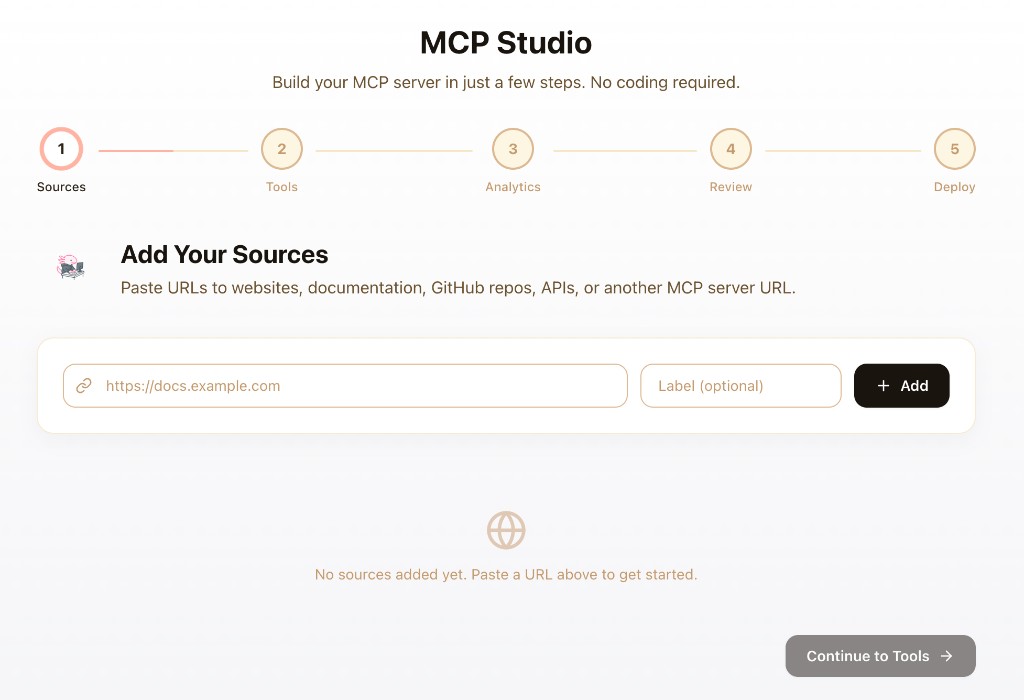
MCP Studio is the no-code builder on Appa Tools. Open the wizard. You do not write any code.
- Name it for the audience.
Employee knowledge base. - Add the internal source. A private repository uses GitHub sign-in and
locks visibility to private. An export uses Upload a file. A
.gdocon disk is only a link. Download PDF, Word, or HTML first. Formats and the 4 MB limit are in Upload files. - Choose search and question answering. Set the server to private if the source did not lock it for you.
- Deploy, open Access, and create a token. Put it in the client as
Authorization: Bearer. One token per person lets you revoke one laptop without rotating the team.
Cursor's JSON is in Give Cursor access to your private documentation. The other clients are in the private servers guide.
Check that it works
Restart the client with the header set. Ask where contractors send invoices. The citation should be the internal page, and the address should match.
From a machine with no token, the same URL should refuse the call. That refusal is the feature.
You: What is the public marketing tagline?
Assistant: Nothing in this server's content covers a marketing tagline. The closest material is the contractor invoice page, which is a different subject. You would need to add that document as a source.
If the reply is not what you expected
If the client never lists the server, the header is missing or the window was not restarted. If curl returns 401, create a new token on this server. Do not paste the token into a prompt or a committed file.
Build your internal knowledge base server today
Build your internal knowledge base server today. Open MCP Studio, add the internal export, deploy it as a private server, and issue a token. Ask where contractors send invoices. Keep it when the citation is the internal page and a request without the token is refused.